
أخبار
Directus Headless CMS Overview: Features & Setup 2026
Quick Summary: Directus is an open-source headless CMS that wraps around your existing SQL database to generate instant REST and GraphQL APIs with a no-code visual interface. Unlike traditional CMS platforms, it doesn’t force you into a predefined schema—it adapts to your database architecture in real-time, making it ideal for developers who need backend flexibility without rebuilding infrastructure.
Headless CMS platforms have shifted how development teams handle content. But Directus takes a fundamentally different approach than most players in this space.
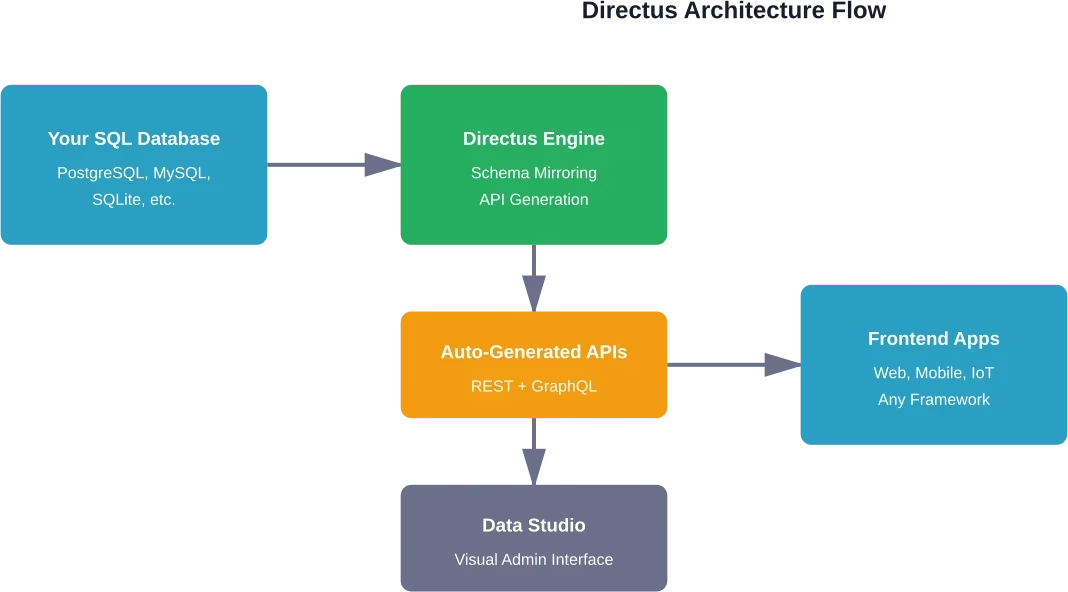
Instead of creating yet another proprietary database with a custom API layer, Directus connects directly to your existing SQL database. It mirrors your schema and dynamically generates endpoints. That’s the core distinction that makes it stand out.
According to the official Directus website, the platform works with any SQL database and delivers both REST and GraphQL APIs out-of-the-box. For teams already running PostgreSQL, MySQL, or other SQL databases, this eliminates the migration headache entirely.
What Makes Directus Different from Traditional CMS Platforms
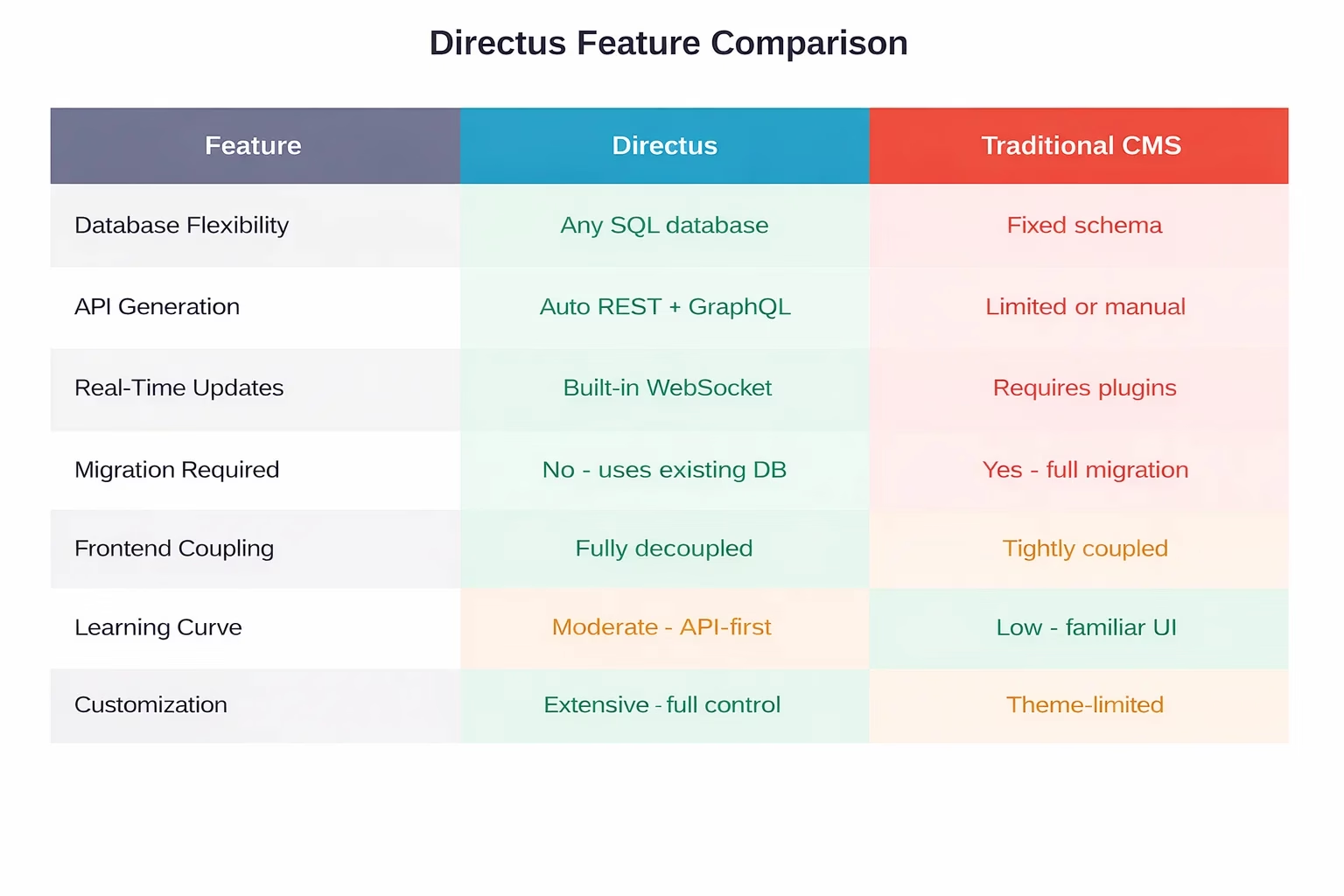
Traditional content management systems come with rigid structures. You’re locked into their database schema, their admin interface, and their idea of how content should be organized.
Headless CMS platforms improved this by decoupling content from presentation. But most still force you into their proprietary backend.
Directus flips this model. It’s database-agnostic and schema-agnostic. Point it at your existing database, and it generates an admin interface automatically. Change your schema, and the interface updates in real-time.
Here’s the thing though—this isn’t just convenient. It fundamentally changes your architecture options. Your database remains the single source of truth. Directus is a layer on top, not a replacement.
Core Features and Capabilities
The platform ships with several components that work together: a data engine that handles API generation, a visual admin interface called Data Studio, and real-time capabilities for live updates.
Instant API Generation
As stated on the official documentation, Directus uses database mirroring to dynamically generate REST endpoints and a GraphQL schema based on the connected database’s architecture. No configuration files. No manual endpoint definitions.
Connect your database, and endpoints appear automatically. Add a new table, and new endpoints appear. The API adapts as you work.
Both REST and GraphQL are available simultaneously. Teams can use whichever fits their frontend framework better.
Visual Data Studio
The Data Studio provides a no-code interface for managing content. Non-technical team members can create, edit, and organize data without touching the database directly.
But here’s where it gets interesting. The interface isn’t a separate system—it’s a real-time reflection of your database schema. Custom fields, relationships, and validations all appear automatically.
The official website notes that Directus delivers a visual interface for any SQL schema, making it accessible to entire teams while keeping developers in control of the underlying data structure.
Real-Time Functionality
Real-time API capabilities let applications receive live updates when data changes. This works through WebSocket connections that push changes to subscribed clients immediately.
For applications like dashboards, collaborative tools, or live content feeds, this eliminates the need for constant polling.
Permissions and Access Control
Granular permission systems let teams control exactly who can read, create, update, or delete specific data. Permissions can be configured down to the field level.
Role-based access control makes it straightforward to set up different permission sets for content editors, administrators, and API consumers.
Getting Started with Directus
The platform can be deployed in multiple ways. The official documentation suggests starting with Docker for local development.
According to the Directus docs, running a local demo requires Docker and a single command that lets developers select a project directory, backend template, and frontend framework.
For production deployments, teams typically self-host on their infrastructure or use Directus Cloud, the official managed hosting service.
Installation Options
Docker is the recommended starting point. The official image includes everything needed to run Directus with any supported SQL database.
For teams that prefer traditional installations, npm packages are available. This gives more control over the Node.js environment but requires manual configuration.
Cloud deployments work with standard platforms like AWS, Google Cloud, and Azure. The platform runs as a Node.js application, so it fits into most hosting environments.
Connecting Your Database
Directus supports PostgreSQL, MySQL, SQLite, MS SQL Server, MariaDB, and CockroachDB. Point it at an existing database or let it create a new one.
Database credentials go into environment variables. Once connected, Directus reads the schema and generates the admin interface automatically.
Existing databases work without modification. Tables become collections, columns become fields, and foreign keys become relationships in the interface.
Directus vs Other Headless CMS Options
Community discussions on platforms like Dev.to highlight comparisons between Directus and alternatives like Strapi and Payload.
According to these developer comparisons, both Directus and Strapi are open-source and free unless teams opt for cloud hosting services. The key architectural difference: Strapi builds its own database structure, while Directus adapts to yours.
Payload can be embedded directly into Next.js applications, but it also functions as a standalone Node.js service and supports various database providers including PostgreSQL and MongoDB. The choice depends on whether teams prefer a configuration-first approach with a GUI or a code-first TypeScript framework.
| منصة | Database Approach | Deployment Model |
الأفضل لـ
|
|---|---|---|---|
| Directus | Wraps existing SQL databases | Standalone API service | Teams with existing databases |
| Strapi | Creates its own schema | Standalone API service | New projects needing full control |
| Payload | MongoDB with code-first config | Can be embedded in Next.js or function as a standalone Node.js service | Tight Next.js integration |
| WordPress Headless | MySQL with WordPress schema | Traditional + API layer | Existing WordPress ecosystems |
Use Cases and Practical Applications
Directus works particularly well for specific scenarios where its architecture provides clear advantages.
Legacy Database Modernization
Organizations with existing SQL databases can add a modern API layer without migrating data. The database stays in place, and Directus provides the interface.
This approach appeared in GitHub discussions where developers explored using Directus as a public API for internal databases, particularly for read-heavy applications.
Multi-Channel Content Delivery
Content needs to flow to websites, mobile apps, digital signage, and IoT devices. Headless architecture makes this straightforward since all channels consume the same API.
Real-time capabilities mean updates appear across all channels simultaneously.
Custom Application Backends
Teams building custom applications often need a backend faster than they can build one from scratch. Directus provides authentication, permissions, file management, and data APIs immediately.
This speeds up development considerably compared to building these systems manually.
Technical Considerations and Best Practices
Running Directus effectively requires attention to a few technical areas.
تحسين الأداء
Database performance directly impacts API performance since Directus queries the database for every request. Proper indexing, query optimization, and caching strategies matter.
For read-heavy applications, database read replicas can distribute load. GitHub discussions mention using read replicas to handle public API traffic while protecting the primary database from performance spikes.
Security and Authentication
Authentication works through access tokens, cookies, or sessions. The platform supports multiple authentication providers and can integrate with existing identity systems.
Field-level permissions ensure sensitive data stays protected even when APIs are public. Teams can expose specific collections publicly while keeping others restricted.
Deployment Architecture
Directus runs as a stateless Node.js application, making it straightforward to scale horizontally. Multiple instances can run behind a load balancer.
File storage can use local disk, S3, Google Cloud Storage, or other providers. For distributed deployments, cloud storage prevents file sync issues.
Build Your Directus Project Without Technical Bottlenecks
A headless CMS like Directus handles content, but the rest of the system still needs to be built and maintained. That usually means backend logic, integrations, frontend development, and making sure everything works together once the product is live. If your team is hitting limits or timelines are slipping, it’s worth bringing in extra support early. This is where a development partner like موبيان can step in, helping you keep moving instead of getting stuck.
Mobian focuses on building and scaling digital products, working alongside in-house teams rather than replacing them. Their role is less about the CMS itself and more about the surrounding architecture and implementation.
If you need to move faster, fix gaps, or get a project back on track, contact موبيان and get the right support in place before delays turn into bigger problems.
Community and Ecosystem
According to the Jamstack directory, Directus has 32,120 stars on GitHub with 4,314 forks and an active community. The repository shows consistent development activity.
The open-source nature means teams can examine the codebase, submit issues, and contribute features. GitHub discussions contain feature requests, technical questions, and community-driven improvements.
Documentation covers installation, API usage, and platform features. The Directus Academy provides video tutorials for teams getting started.
Pricing and Licensing
Directus is open-source software. Teams can self-host without licensing costs.
For teams that prefer managed hosting, Directus offers cloud services. Pricing varies based on usage and requirements—check the official website for current plans and pricing details.
The self-hosted option gives complete control over infrastructure and data, while cloud hosting removes operational overhead.
When Directus Makes Sense
Not every project needs Directus. The platform excels in specific situations.
Teams with existing SQL databases gain immediate value. Instead of migrating data or building custom APIs, Directus provides both instantly.
Projects requiring custom data models benefit from the schema flexibility. Rather than conforming to predefined content types, teams design exactly the structure they need.
Applications that need both REST and GraphQL avoid choosing between them. Directus generates both from the same schema.
Organizations that want to maintain direct database access keep full control. The database isn’t hidden behind an abstraction layer—it’s still the source of truth.
But here’s the reality: teams unfamiliar with APIs and headless architecture face a learning curve. Traditional CMS platforms provide more guidance for content-first websites. Directus assumes technical capability.
Moving Forward with Directus
The headless CMS landscape keeps evolving. Directus positions itself uniquely by wrapping existing databases rather than replacing them.
For development teams building custom applications, this approach reduces infrastructure complexity. The database stays familiar. The API layer appears automatically. Content teams get a visual interface without developers building one.
Real talk: Directus isn’t the simplest option. It’s the most flexible option for teams that need database control and API automation simultaneously.
Start with the Docker demo to explore the interface. Connect a test database and watch the API generated. That hands-on experience clarifies whether the architecture fits your needs better than reading documentation.
Check the official Directus website for current documentation, deployment guides, and community resources to begin implementation.
التعليمات
Can Directus work with an existing database without changes?
Yes. Directus reads existing SQL database schemas and generates APIs automatically. Tables, columns, and relationships work without modification. The platform adapts to the database structure rather than requiring the database to change.
What databases does Directus support?
Directus supports PostgreSQL, MySQL, SQLite, MS SQL Server, MariaDB, and CockroachDB. According to the official documentation, it works with any SQL database that these drivers support.
How does Directus compare to WordPress as a headless CMS?
WordPress started as a traditional CMS and added API capabilities later. Directus was built as a headless CMS from the ground up. WordPress works well for content-focused sites with existing WordPress ecosystems. Directus fits better for custom applications and teams working with SQL databases directly.
Does Directus require coding knowledge to use?
The Data Studio interface works without coding—content teams can manage data visually. Setting up Directus, configuring databases, and integrating APIs requires development knowledge. It’s built for teams that include developers.
Can Directus handle real-time collaborative editing?
Directus includes real-time API capabilities through WebSocket connections. Applications can receive live updates when data changes. The admin interface shows when other users are editing content, though full collaborative editing like Google Docs isn’t built-in.
What hosting options work with Directus?
Teams can self-host on any platform that runs Node.js applications—AWS, Google Cloud, Azure, DigitalOcean, or dedicated servers. Docker deployments simplify hosting. Directus Cloud provides managed hosting for teams that prefer not to handle infrastructure.
How does API generation work in Directus?
Directus uses database mirroring to read the schema and dynamically generate endpoints. Add a table to the database, and REST endpoints plus GraphQL types appear automatically. The API structure reflects the database structure in real-time.
Ready to stop rebuilding and start shipping?
Most of our engagements start with a single conversation about where your current team is stuck. No pitch deck, no obligations.


