
Nouvelles
Sample Marketing Plan for a New Software Development Company
Launching a software development company is exciting. You’ve got the skills. You’ve probably shipped solid products before. But then comes the part nobody talks about enough – finding consistent, paying clients.
Good marketing isn’t about posting randomly on LinkedIn or running ads because someone said you should. It’s about clarity. Who you help. What problem you solve. And why you’re a better choice than the other fifty dev shops in your city or on Google.
This sample marketing plan is built for founders who want something practical. No fluff. No vague branding talk. Just a focused approach that helps you move from “new agency” to “trusted partner” without burning time or money.
Let’s break it down.
How Mobian Puts Strategy Into Practice
À Mobien, we build our marketing around the same principle described in this guide – clarity first. We focus on what we do best: building dedicated engineering teams and delivering end-to-end digital products for growing businesses. Whether our clients need to strengthen their in-house team with senior specialists or launch a full-scale platform from scratch, we provide structured support under one roof. Our services include team augmentation, custom development, scalable architecture design, AI and cloud integration, and long-term product maintenance.
We position ourselves as a long-term technology partner, not a one-time contractor. Our teams work exclusively on our clients’ projects, integrate smoothly into existing workflows, and stay involved after launch to support scaling and optimization. That clear structure – dedicated teams, custom solutions, seamless integration, and continuous growth support – reflects the same focused marketing approach any new software development company should adopt: define your strengths, communicate them precisely, and build long-term value instead of chasing short-term visibility.
Core Steps to Build a Real Marketing System
Before tactics, tools, and channels, you need structure. A strong marketing plan for a new software development company is built on clear priorities, sharp positioning, and disciplined execution. The sections below walk through the key foundations – from choosing one goal to building authority and measuring what matters. Each step connects to the same idea: focus first, scale second.
1. Start With One Clear Marketing Goal
New agencies often try to do everything at once. Brand awareness, SEO, LinkedIn, ads, events, partnerships. It feels like progress, but it usually leads to diluted effort. Instead, choose one clear priority for the next 6 to 12 months. For most new software development companies, that priority should be generating sales-ready leads. Not traffic. Not followers. Not impressions. Real conversations with companies that have a clear need and the budget to solve it.
When you focus on qualified leads, your decisions become simpler. Your website works as a sales tool. Your content answers buying questions. Outreach is targeted. KPIs are tied to revenue, not vanity metrics. Once you have a steady flow of qualified opportunities, you can expand into brand building or thought leadership. First, build the system that brings in projects.

2. Define Your Niche Before You Define Your Services
Here is a common mistake. A new agency lists every possible service:
- Développement Web
- Applications mobiles
- SaaS platforms
- Conception UX
- DevOps
- AI integrations
- Blockchain
- You name it
That feels safe. It feels flexible. In reality, it makes you invisible. You need to narrow your focus.
Start by answering three specific questions:
- What problems are we best at solving?
- For which type of companies?
- In what context?
Instead of saying, “We build software for everyone,” you might say:
- We help early-stage B2B SaaS founders launch MVPs in under 90 days.
- We modernize legacy systems for mid-sized manufacturing companies.
- We build internal tools for logistics companies struggling with manual workflows.
Specific beats generic every time. Narrowing your niche does not limit you. It makes your marketing sharper. It reduces competition. It helps you speak directly to one audience instead of trying to impress everyone. If someone lands on your website and immediately thinks, “This is exactly for us,” you are on the right track.
3. Clarify Your Positioning and Core Message
When your niche is clearly defined, positioning stops being complicated. It becomes focused. At that point, you are simply answering one practical question: why should a client choose you over another development company?
The mistake many agencies make is hiding behind generic statements like high quality solutions, innovative approach, or client-focused service. Those phrases sound safe, but they do not differentiate you. Every competitor claims the same things.
Stronger positioning comes from clarity. You need to articulate what you actually offer, how you work, where your expertise lies, and what concrete results clients can expect. That level of specificity is what makes your message believable and memorable.
For Example:
- We help funded startups launch stable MVPs without technical debt.
- We replace outdated enterprise systems with scalable cloud-native architecture.
- We embed senior developers into product teams to accelerate delivery.
You can feel the difference right away. Those examples are built around outcomes and real context, not just a list of skills or technologies.
A strong positioning statement should do three things clearly. It needs to speak to a specific audience, point to a real problem they recognize, and promise a tangible result. If any of those elements are missing, the message will feel vague.
Keep the language simple. If your positioning sounds like it was copied from a startup pitch deck, it is probably too polished and too generic. Rewrite it until it sounds like something you would actually say in a serious client conversation.
4. Build a Website That Converts, Not Just Looks Good
Your website should not function as a digital brochure that simply lists services and talks about your company. It is your main sales tool. In many cases, it creates the first impression before you ever speak to a prospect.
Good design is important, but clarity is more important. When someone lands on your homepage, they should instantly understand who you work with, what results you help them achieve, and what the next step is. If they have to guess or dig for answers, you are losing opportunities.
Your Website Needs:
- A clear hero section with your positioning
- A short explanation of your process
- Real examples or case studies
- A breakdown of services tied to outcomes
- Strong calls to action
- A resource or blog section
One important detail. Do not make your site about you. Make it about your client.
- Instead of: “We are a passionate team of engineers…”
- Try: “If you are building a SaaS product and need a reliable team to ship fast without sacrificing quality, here is how we can help.”
Subtle shift. Big impact.
Bring in social proof as early as possible. Even if your company is new, you probably have experience you can reference. That might include freelance projects, work completed in previous roles, or testimonials from colleagues and clients you have collaborated with.
Use that proof strategically. People trust evidence more than promises. Showing real work and real feedback reduces hesitation and makes it easier for prospects to take the next step.
5. Create a Lead Magnet That Solves a Real Problem
Not everyone who lands on your website is ready to jump on a call. That is completely normal. Some people are still researching. Others are comparing options. You need a softer way to start the relationship, and that is where a lead magnet comes in.
Avoid creating another generic “Ultimate Guide to Software Development.” Broad, vague PDFs rarely help anyone. Instead, build something practical and tailored to your niche. It could be an MVP cost calculator for SaaS founders, a technical audit checklist for companies running legacy systems, a guide to choosing the right tech stack for a marketplace product, or a risk assessment template for rebuilding enterprise software.
The purpose is simple. It should help your ideal client make a smarter decision or feel more confident about the next step. Place it behind a short form, collect their contact details, and follow up with relevant, useful emails. Email may not be flashy, but in tech services it works. Many deals close after weeks or months of steady, trust-based communication.
6. Build an Inbound Content Engine With Purpose
Content marketing does work, but only when there is a clear purpose behind it. Publishing articles just to keep the blog active is a waste of time.
Every piece of content should serve a specific goal. It might help you rank for high-intent search queries, answer objections that come up during sales calls, showcase your expertise in a certain area, or build trust with both technical and business decision-makers. If a post does none of these, it probably does not need to be written.
Start with SEO research around long-tail keywords related to your niche.
For Example:
- “How much does it cost to build a SaaS MVP?”
- “When should you replace legacy ERP systems?”
- “In-house vs outsourced software development for startups”
Write in a clear, human tone. Avoid corporate fluff. Answer questions honestly, even if the answer is “It depends.”
If developers are part of your audience, accuracy matters. Do not oversell. If your solution has limitations, acknowledge them. Transparency builds credibility.
Your content can include in-depth blog posts, technical deep dives, case studies, founder insights, and lessons from real projects. What matters most is consistency. Publishing once and disappearing for months will not build authority.
7. Choose Two Core Marketing Channels and Go Deep
One of the biggest mistakes new software companies make is trying to be everywhere at once. They spread effort across too many channels and end up doing none of them well.
If your company has fewer than 100 employees, choose one primary marketing channel and one secondary channel. That is enough.
Your primary channel could be SEO, LinkedIn thought leadership, targeted outbound, or account-based marketing. The secondary channel should support the first.
For example, if SEO is your primary channel, LinkedIn can help distribute your content and extend its reach. If outbound is your primary focus, content can warm up prospects before you contact them. When you concentrate on two channels instead of five, you build real traction instead of shallow visibility.
8. Add Targeted Outbound Campaigns
Inbound marketing is effective, but it takes time to gain traction. If you need faster momentum, combine it with targeted outreach.
Avoid sending mass cold emails. Instead, build small, focused campaigns around specific groups. Look for recently funded startups in your niche, companies hiring for technical roles you could support, or organizations publicly announcing digital transformation initiatives.
Personalization is essential. Show that you understand their business and reference something concrete. A strong outreach email is relevant, presents a clear benefit, and suggests a simple next step. Follow up consistently, since many responses come after the third or fourth message. Done correctly, outbound should feel thoughtful and useful, not intrusive.
9. Speak Differently to Developers and Business Leaders
In many software projects, the buying decision is not made by one person. It usually involves both technical and business stakeholders, and they look at the same proposal from very different angles.
Developers focus on code quality, architecture, integration, performance, and documentation. They want to know how things work and whether the solution is solid. Business leaders, on the other hand, care about ROI, speed to market, risk reduction, cost predictability, and team productivity. Their questions are more about impact and outcomes.
Your marketing needs to speak to both groups. For technical audiences, provide real examples, avoid buzzwords, and include meaningful technical details. If relevant, share code snippets or architecture diagrams. For business audiences, highlight case studies, present measurable results, and explain trade-offs in clear, simple terms.
When you manage to bridge that gap in your messaging, you stand out. You show that you understand not just the technology, but the business behind it.
10. Build Partnerships to Accelerate Growth
Partnerships are often underestimated by new agencies, even though they can become one of the most reliable growth channels.
Look for companies that already serve your target audience but do not offer development themselves. That might include design agencies without in-house engineers, marketing agencies focused on your niche, SaaS founders who need technical support, or consultants leading digital transformation projects.
A well-structured partnership can generate recurring work without significant marketing spend. The key is to approach it with a clear value proposition. Explain how collaboration benefits both sides. Do not simply ask for referrals. Offer something concrete that makes the partnership worthwhile.
11. Turn Every Project Into a Case Study
Social proof drives decisions. After completing a project, take the time to document it properly. Capture the initial problem, the constraints you were working under, the solution you implemented, the measurable outcome, and a direct quote from the client.
Even if the results are not dramatic, present the story clearly and honestly. A simple structure works best: background, challenge, approach, results, and lessons learned. Do not polish it to the point where it feels unrealistic. If the project had difficulties, mention them. Prospects understand that real work comes with obstacles, and transparency makes your company more credible.
12. Measure What Actually Matters
Marketing without tracking is guesswork.
At a minimum, monitor:
- Website traffic
- Conversion rate to calls
- Number of discovery calls
- Proposal close rate
- Cost per lead if running ads
- Source of each deal
Use tools like Google Analytics, Search Console, and a CRM system. But do not drown in data. Focus on metrics tied to revenue. Review results monthly. If something is not working, adjust. Marketing is an experiment, not a fixed plan carved in stone.
13. Avoid Common Traps
New software development companies often fall into the same predictable traps. They post company updates that no one outside the team really cares about. They chase social media followers without a clear strategy. They publish generic blog posts that could apply to any agency. They outsource technical content to writers who do not fully understand the subject. Or they try to present themselves as bigger and more established than they actually are.
A better approach is simpler and more effective. Stay focused on solving real problems for a defined audience. Invest time in understanding how your clients think and what they struggle with. Create fewer pieces of content, but make them strong and useful. Encourage collaboration between technical and marketing team members so the messaging stays accurate and grounded.
In this industry, authenticity matters. Clients can tell when it is missing.
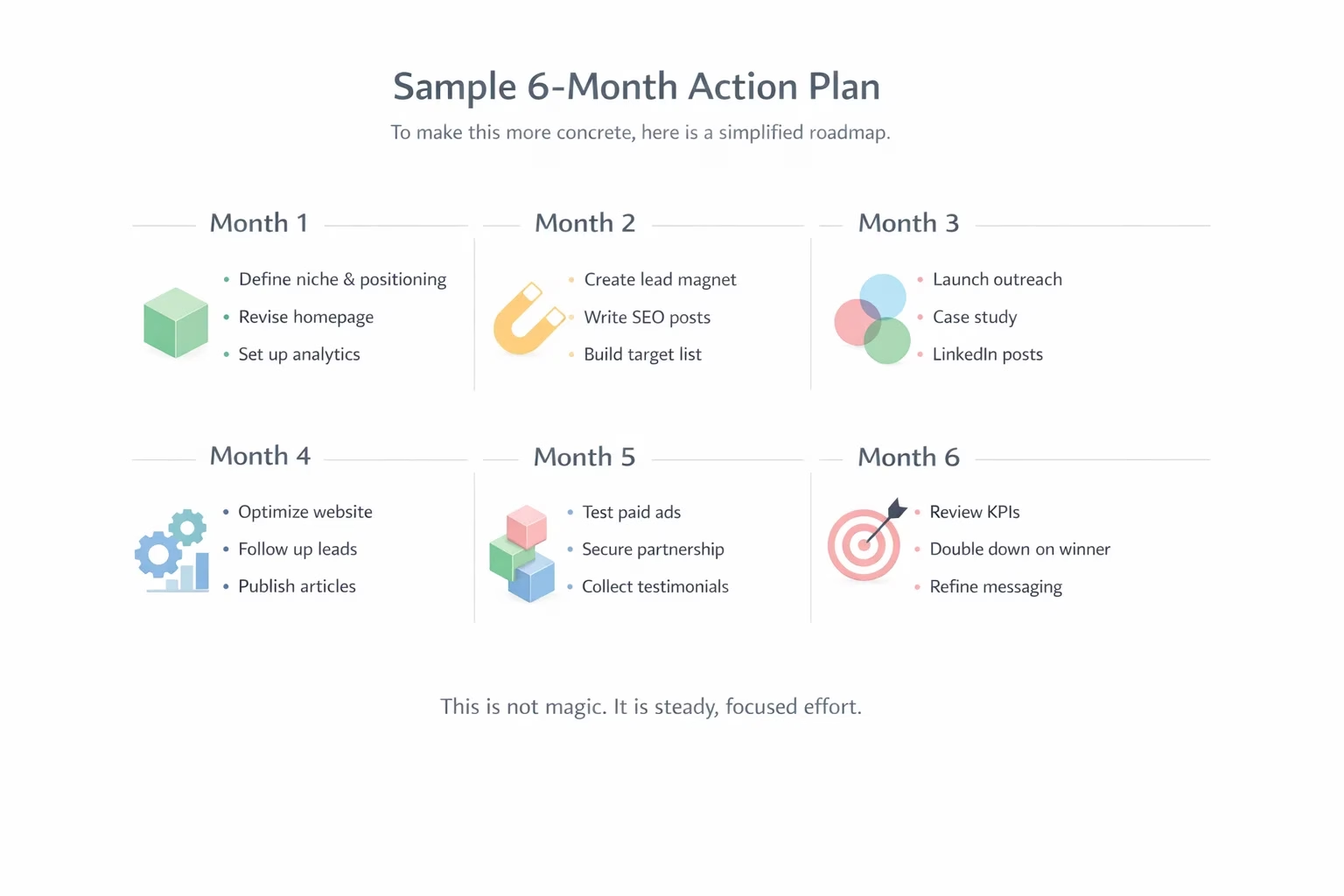
14. Sample 6-Month Action Plan
To make this more concrete, here is a simplified roadmap.
Month 1:
- Define niche and positioning
- Rewrite homepage messaging
- Set up basic analytics and CRM
Month 2:
- Create one strong lead magnet
- Publish two high-quality SEO blog posts
- Build list of 50 ideal target companies
Month 3:
- Launch targeted outreach campaign
- Publish first case study
- Begin LinkedIn thought leadership posts
Month 4:
- Optimize website based on early data
- Continue outreach and follow-ups
- Publish two more in-depth articles
Month 5:
- Test small paid campaign if budget allows
- Secure one partnership
- Collect testimonials
Month 6:
- Review KPIs
- Double down on best-performing channel
- Refine messaging based on sales conversations
This is not magic. It is steady, focused effort.
Réflexions finales
A marketing plan for a new software development company should be clear, focused, and practical. Define your niche. Articulate your positioning. Build a website that converts. Create content that answers real buying questions. Choose one or two channels and execute them well.
Marketing is not a one-time activity. It is a system you refine over time. Track what drives qualified conversations and revenue, and adjust based on data. Consistency and clarity matter more than volume. If you stay focused on solving specific problems for a defined audience, growth becomes predictable.
FAQ
1. How long does it take to see results from marketing?
Outbound campaigns can generate conversations within weeks. SEO and content usually require three to six months to produce steady results. The timeline depends on your niche, competition, and consistency.
2. Should a new software company run paid ads?
Paid ads make sense only after your positioning and website are optimized. Without clear messaging and a strong offer, ads will not convert efficiently.
3. Is choosing a niche really necessary?
Yes. A defined niche sharpens your messaging, reduces competition, and improves lead quality. Broad positioning typically leads to weak differentiation.
4. What type of content works best for software development companies?
Content that addresses specific problems, cost considerations, technical decisions, and real case studies performs best. Practical, experience-based insights outperform generic advice.
5. How do we measure marketing performance effectively?
Focus on metrics tied to revenue, such as qualified leads, booked calls, proposal close rate, and cost per lead. Traffic and engagement matter only if they lead to business outcomes.
Ready to stop rebuilding and start shipping?
Most of our engagements start with a single conversation about where your current team is stuck. No pitch deck, no obligations.


