
News
What Does MVP Mean in Software Development?
If you’ve spent any time around product teams, you’ve probably heard the term MVP tossed around in meetings. It sounds simple, almost obvious. But behind those three letters sits one of the most practical ideas in modern software development.
MVP stands for Minimum Viable Product. And no, it’s not about building something half-baked. It’s about building just enough to learn what actually matters.
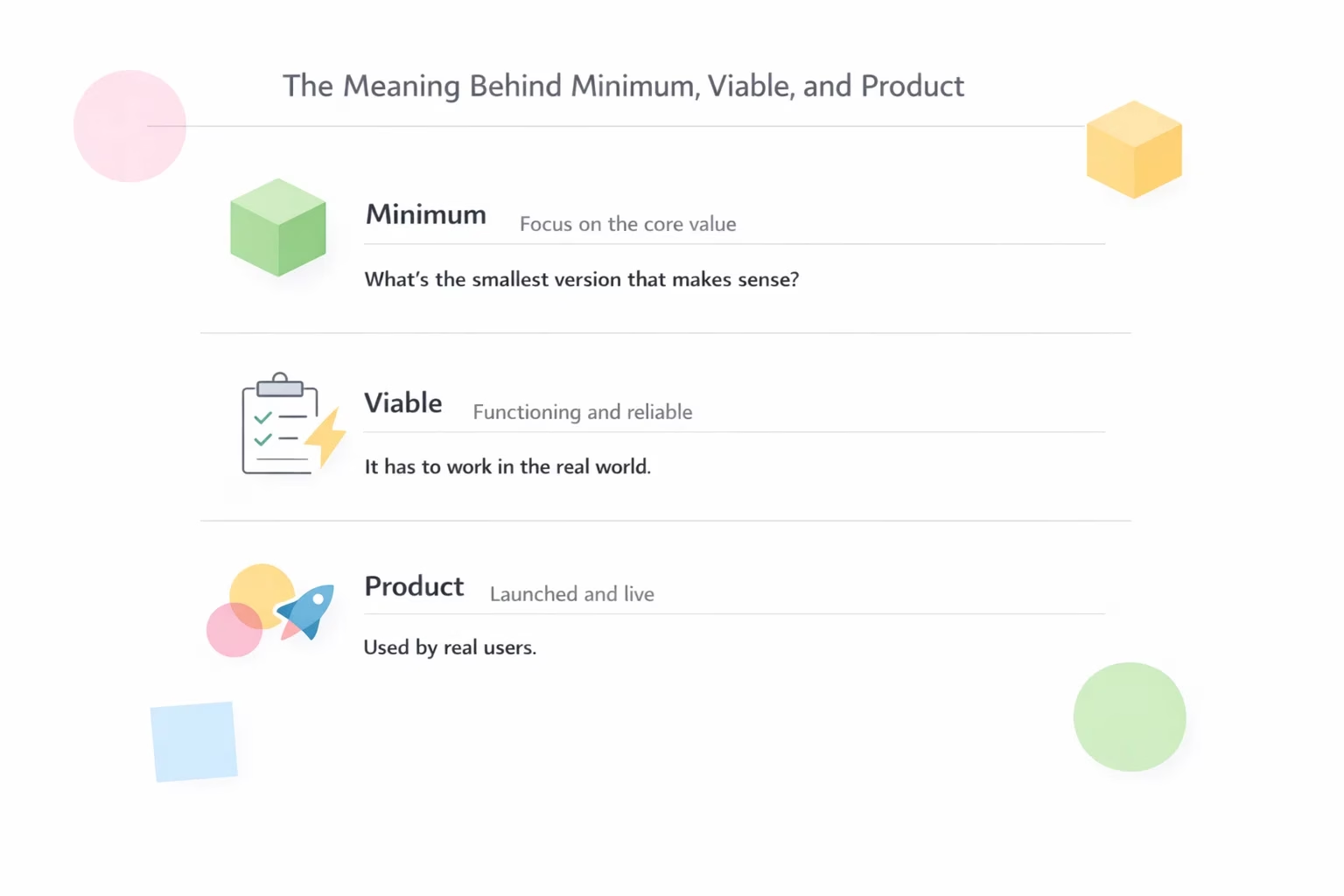
The Meaning Behind Minimum, Viable, and Product
The phrase Minimum Viable Product sounds simple, but each word carries weight. If you misunderstand even one of them, you end up building the wrong thing. Let’s look at the three parts.
Minimum
Minimum does not mean basic, cheap, or unfinished. It means stripping your idea down to its core value. You identify the one main problem you are solving and remove everything that does not directly support that goal. That often requires discipline. Most teams want to add features. More screens. More integrations. More polish.
MVP forces you to ask a harder question:
- What is the smallest version of this product that still makes sense?
If the feature does not support the core problem, it does not belong in the first version.
Viable
Viable is where many teams get confused. An MVP is not a mockup. It is not a wireframe. It is not a concept. It must work.
Users should be able to interact with it in a real environment. The core functionality must function reliably. The experience does not need to be perfect, but it cannot be broken or misleading. If users try it and cannot complete the main action, it is not viable.
Product
This part is important. An MVP is a product. That means it is released. It is available to users. It exists outside internal documents and development environments.
You do not learn from ideas. You learn from products people actually use.
Why MVP Became Essential in Modern Software Development
Software development used to follow a different rhythm. Teams would spend months, sometimes years, building a full solution before anyone outside the company touched it.
Then the product would launch. And sometimes it failed. The problem was simple. Decisions were made based on assumptions, not evidence. MVP changed that approach.
Instead of building everything upfront, teams build a smaller version, release it early, and collect feedback. That feedback shapes the next iteration.
This shift supports:
- Faster time to market
- Lower upfront investment
- Early validation of demand
- Real user insights
- More efficient use of development resources
In practical terms, an MVP helps you answer one key question: Is this worth building further? Without an MVP, you might spend a year building something that nobody truly needs.
From Idea to Scalable Product with Mobian
At Mobian, we build digital products from the ground up and help teams scale what already exists. Whether it is assembling a dedicated engineering team or delivering end to end development, our focus stays the same – build what brings value now and create a foundation that can grow. In many cases, that naturally starts with a lean first version of the product that validates the idea before expanding further.
We work with scalable architectures, modern technologies, and long term support in mind. From healthcare and fintech platforms to enterprise systems and SaaS solutions, our goal is not just to launch features, but to deliver reliable products that evolve with the business. In that sense, the MVP approach is not a separate service for us. It is simply a practical and responsible way to build.
MVP and the Software Development Lifecycle
An MVP is not a separate project that exists outside your development process. It fits directly into the software development lifecycle.
Typically, the flow looks like this:
- Idea and problem definition
- Market and user research
- Feature prioritization
- MVP development
- Launch to early users
- Feedback and data collection
- Iteration and improvement
The MVP usually comes after initial planning but before large scale development. It acts as a bridge between concept and full product. It reduces uncertainty early.
For development teams, that clarity matters. Engineers can focus on building what truly supports the main objective instead of chasing speculative features.
MVP vs Prototype vs Proof of Concept
These terms are often mixed up. They are not the same thing. Understanding the difference prevents wasted effort.
Prototype
A prototype is usually a visual or interactive model that shows how a product might look or behave. It often includes wireframes, clickable mockups, or basic interface flows that simulate user interaction. However, it typically does not include real backend logic or full functionality.
The main purpose of a prototype is to test usability and design direction. It helps teams and stakeholders visualize the concept and identify potential issues early. You can present it in meetings and run usability tests with it, but it is not something users can rely on as a fully working product.
Proof of Concept
A proof of concept, or PoC, tests technical feasibility.
Key Questions:
- Can this algorithm process data at scale?
- Can we integrate with this external system?
- Can this architecture support the expected load?
A PoC is usually internal. It is not meant for customers.
MVP
An MVP combines real functionality with real exposure. It is not just a concept or internal test. It is a working, usable product that is released to actual users and built specifically to collect feedback from the market.
Its role is to validate demand and usability at the same time. If a prototype shows how a product might look, and a proof of concept shows whether it can technically work, an MVP answers a more important question – should this product exist at all?
MVP – What It Is and Why It Matters
Understanding an MVP goes beyond the definition. It is about knowing what it is not, why you build it, and what makes it effective. When these pieces align, an MVP becomes a strategic tool instead of just a smaller version of a product.
What an MVP Is Not
An MVP is not a broken product or a half coded feature released in a hurry. It is not an excuse to lower quality standards, and it is definitely not a placeholder while you figure things out later. If the core experience feels unreliable or unfinished, the feedback you gather will not reflect the real potential of the idea. Users might walk away because of poor execution, not because the concept lacks value. Minimal does not mean careless. It means deliberate and focused.
Why You Build an MVP
At first glance, the goal of an MVP seems simple – launch faster. But speed is only part of the story. The real purpose is learning. An MVP helps you understand whether users recognize the value, whether they return to use the product again, and whether they are willing to pay for it. It reveals which features actually matter and where friction appears in the experience. Without real usage data, product decisions rely on opinions and internal assumptions. With an MVP, those decisions are grounded in evidence. For startups, this insight can attract investment or prevent wasted funding. For established businesses, it can stop costly missteps before they scale.
What Makes an MVP Strong
Not every MVP delivers clarity. The strong ones share common traits. They focus on solving one specific problem for a clearly defined audience. They include only the features required to deliver that value, yet remain technically stable and usable in real conditions. They are released early, without excessive polishing, but never at the cost of reliability. The priority is not visual perfection. It is clarity of purpose. When users immediately understand what the product is meant to do, their feedback becomes precise and genuinely useful.
Common Mistakes Teams Make With MVPs
Even experienced teams struggle with MVP discipline. The most common issues show up again and again.
Adding Too Many Features
This is the classic trap. The team wants to improve usability. Then someone suggests an integration. Then analytics. Then customization options.
Suddenly the MVP looks like a full product. The danger here is dilution. You lose focus and delay release.
Waiting Too Long to Launch
Perfectionism kills momentum. Teams delay launch because:
- The UI needs refinement
- Edge cases are not fully handled
- Documentation is incomplete
Meanwhile, real feedback is delayed. The market moves on.
Ignoring Feedback After Launch
Launching an MVP is not the finish line. It is the starting point. If user insights are collected but not acted upon, the MVP loses its purpose.
Making It Too Minimal
On the other side, some teams cut too deeply. If users cannot complete the main task, or if the experience feels unreliable, the MVP fails to generate meaningful insights. Balance matters.
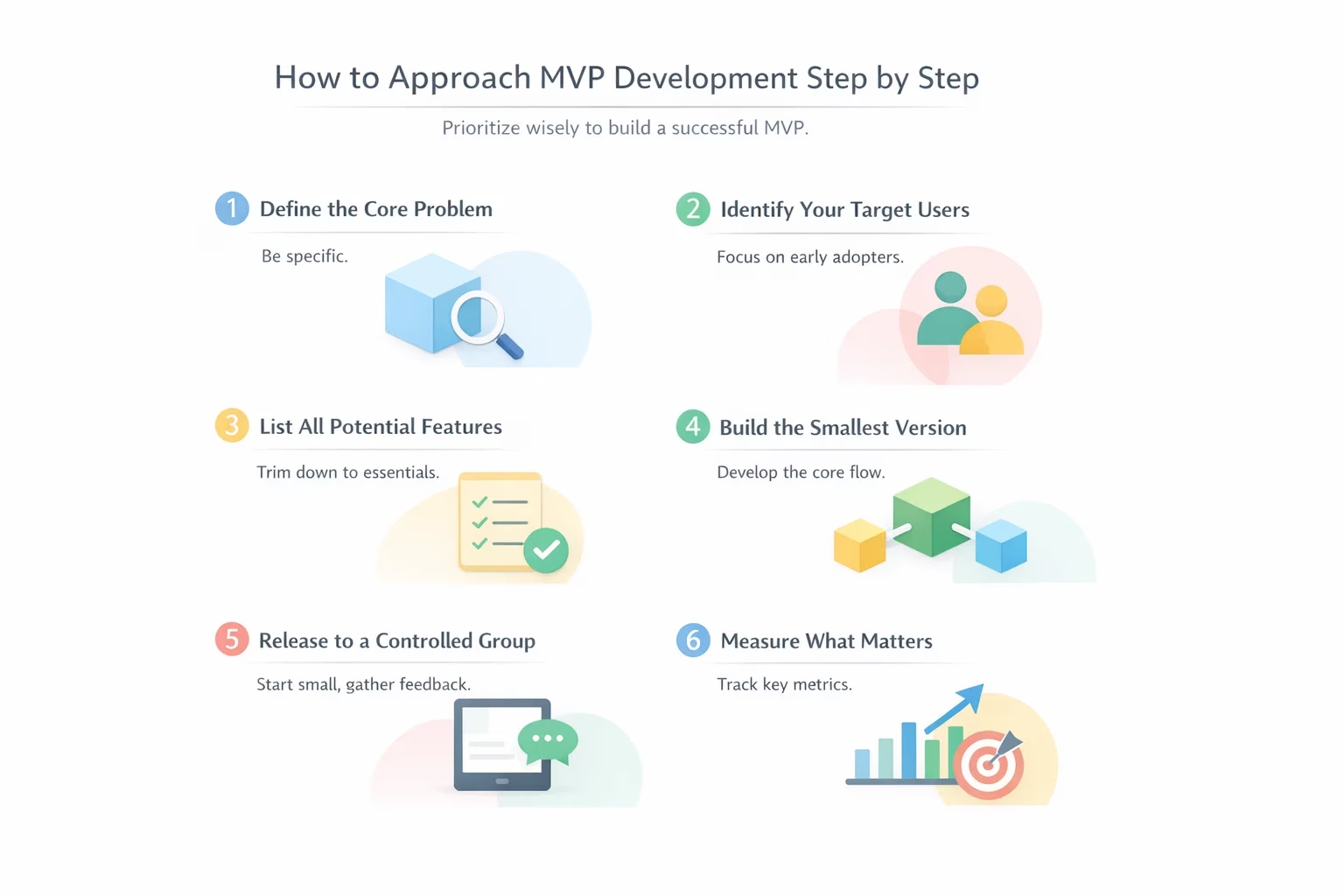
How to Approach MVP Development Step by Step
Building an MVP is not about cutting corners. It is about prioritizing. Here is a practical approach that works across industries.
1. Define the Core Problem
Be specific.
Instead of saying, “We want to build a task app,” clarify:
- Who struggles with task management?
- What exact problem are they facing?
- How are they solving it now?
If you cannot describe the pain clearly, you are not ready to build.
2. Identify Your Target Users
An MVP is not designed for everyone, and that is intentional. It is usually created for early adopters who feel the problem more strongly than others, are open to trying new solutions, and are willing to share honest feedback. These users are not looking for perfection. They are looking for something that genuinely helps. If you try to build the first version for a broad audience, you risk diluting the value and losing focus. Narrowing your target in the beginning gives you clearer insights and a much stronger starting point.
3. List All Potential Features
Write everything down. No filtering yet. Then start removing.
Ask for each feature:
- Does this directly solve the core problem?
- Can users achieve value without it?
If the answer is yes, remove it from version one.
4. Build the Smallest Functional Version
Develop only what is required for the core user flow. In a task management app MVP, that would mean task creation, task completion, and basic categorization. Collaboration tools, advanced reporting, and automation are not included in the first version because they are not essential to validating the core value.
5. Release to a Controlled Group
Release the MVP to a controlled group instead of aiming for massive scale right away. Start with beta testers, a niche community, or a limited user group. This approach keeps feedback manageable and makes it easier to identify clear patterns and actionable insights before expanding further.
6. Measure What Matters
Before launching, define the key metrics that will determine whether your MVP is working. Depending on the type of product, this might include user activation rate, retention over a week or a month, completion of the core action, or conversion to a paid plan. The exact metrics will vary, but the principle stays the same. You need clear indicators of real engagement and value. Data, not intuition, should guide your next iteration and product decisions.
How MVP Works in Real Development
In theory, MVP sounds simple. In real development, it becomes part of how teams plan, build, and make decisions. It is not a separate phase that exists in isolation. It fits directly into daily workflows and long term product strategy.
MVP in Agile and Scrum
MVP development fits naturally into Agile and Scrum because both rely on short cycles and constant adjustment. In Scrum, work is divided into sprints, and after each sprint the team delivers a usable part of the product. Over the first few sprints, that usable part often becomes the MVP.
The key advantage is flexibility. Priorities can change based on feedback. The backlog is updated according to real user behavior, not assumptions. Instead of building everything according to a fixed long term plan, the team adapts step by step. In this setup, the MVP is not just a launch milestone. It becomes part of how the product evolves.
MVP Beyond Startups
MVP is not only for startups. Large companies use the same approach to reduce risk. A bank might test a new feature with a small group of clients. A retailer could launch one product version before expanding the line. An online school may release one course module before building a full program.
In bigger organizations, this approach helps avoid costly mistakes. Decisions are based on real usage data instead of internal opinions. It makes investment choices more grounded and easier to justify.
MVP vs Full Product
An MVP and a full product serve different purposes. An MVP focuses on core value, early validation, limited functionality, and fast learning. It answers one question – is this idea worth developing further?
A full product shifts the focus to scalability, performance, advanced features, broader reach, and stronger market positioning. It builds on what was validated earlier.
Skipping the MVP often leads to overbuilding. Teams add features they assume users want. Starting with an MVP keeps the process focused and practical.
Building an MVP – Skills and Real Example
Behind every successful MVP there is a team that knows how to balance speed with quality. It is not about cutting corners. It is about making smart decisions, using the right expertise, and focusing on what truly needs to be built first.
What Skills Are Needed
Building a strong MVP still requires solid expertise. The difference is not in the level of skill, but in how that skill is applied. You are not building a full ecosystem. You are focusing on the core.
A typical MVP team needs backend and frontend development to handle functionality and user interaction. UI and UX design are essential to make sure the product is clear and usable. Database architecture and API integration ensure the system works reliably. Testing and quality assurance protect the core experience from breaking. Analytics implementation allows you to track real behavior. Product management keeps priorities sharp. And clear communication across the team keeps everything aligned.
The focus is different from full product development. You are not trying to deliver everything at once. You are building what matters most right now and doing it well.
A Practical Example
Imagine you are building a marketplace for freelance designers. A full version of the product might include advanced search filters, secure payment processing, reviews and ratings, a built in messaging system, an analytics dashboard, a mobile app, and subscription plans.
An MVP would look much simpler. You might start with designer profiles, basic search functionality, and a simple contact form. Instead of building a complex payment system, you could handle transactions manually at the beginning.
This allows you to test:
- Are clients willing to reach out?
- Are designers willing to join?
- Does the matching process create value?
If the answer is no, you saved months of development.
If the answer is yes, you build the next layer with confidence.
Conclusion
MVP stands for Minimum Viable Product. In software development, it means building the smallest functional version of a product that can be released to real users and tested in the market.
It is not about cutting quality. It is about narrowing the focus to what truly matters. A good MVP helps you validate demand, understand user behavior, and make decisions based on facts instead of assumptions. It saves time, reduces risk, and gives your product a clearer direction. Done right, an MVP is not a temporary shortcut. It is the foundation for sustainable growth.
FAQ
1. What does MVP stand for in software development?
It stands for Minimum Viable Product. This is a working version of a product with only the essential features needed to deliver core value and collect user feedback.
2. Is an MVP a finished product?
No. It is a functional but limited version of a product. It focuses on the main problem and leaves advanced features for later stages.
3. Why is an MVP important?
It allows teams to test ideas with real users before investing heavily in full development. This reduces the risk of building something that the market does not need.
4. How is an MVP different from a prototype?
A prototype is usually a visual or interactive model used for testing design or concept. An MVP is a usable product released to real users to validate demand.
5. What comes after an MVP?
After launch, teams analyze user feedback and performance metrics. If the idea proves valuable, the product is expanded step by step into a more complete and scalable solution.
Ready to stop rebuilding and start shipping?
Most of our engagements start with a single conversation about where your current team is stuck. No pitch deck, no obligations.


